The Uniplex Guide · Branding & Business
Embroidery vs Printing for Branded Clothing: How to Choose the Right Finish
Quick answer: Choose a clothing branding method by matching the garment, logo detail, print area, quantity and daily use. Embroidery can suit a compact logo with a textured finish; print methods can suit larger or more detailed artwork. Confirm compatibility for the exact garment before ordering.
Your staff can wear the same logo and still look as though they work for different businesses. Different garment colours, inconsistent logo sizes and uncomfortable fits can undo the effect of an otherwise good design.
The embroidery vs printing decision is one part of the order. The better starting point is what your team does all day and how you want customers to recognise them.
Start with the garment, not the technique
Consider the work environment, movement, laundering and how often the item will be worn. A breathable golf shirt for customer visits solves a different problem from a warm jacket for early-morning outdoor work. Ask staff about fit and use the selected product’s size guide.
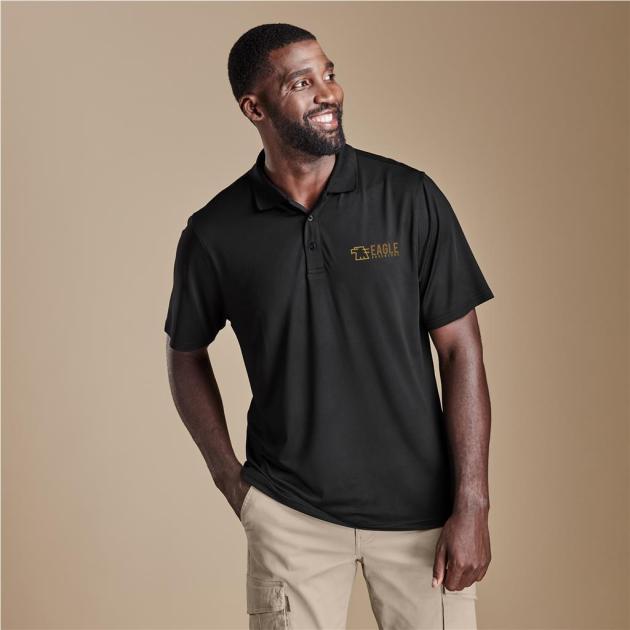
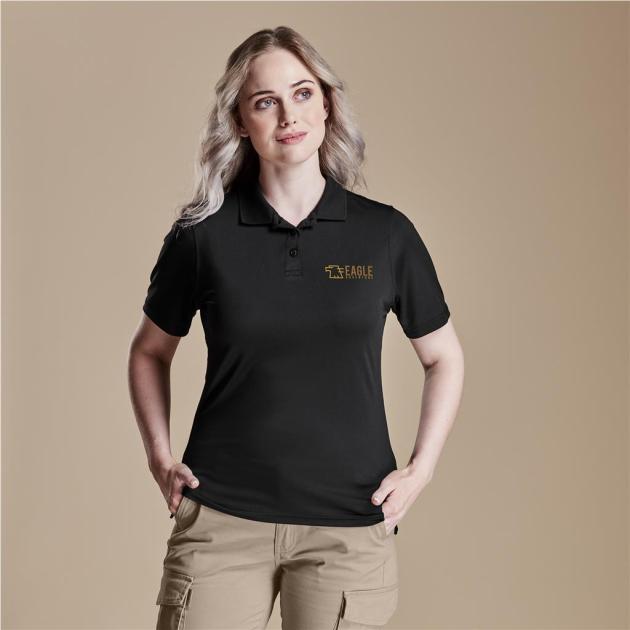
The Mens Letaba Golf Shirt and Ladies Letaba Golf Shirt provide a coordinated starting point to explore. Confirm current colours, sizes and the approved branding options on each style. A garment recommendation alone does not confirm that every technique or logo position is available.
Embroidery: thread, texture and considered scale
Embroidery builds a design with stitches. It requires artwork prepared for the embroidery process, rather than simply sending the original logo to a machine.
When assessing it, pay attention to small letters, narrow gaps and dense areas. A tiny tagline that looks fine on screen may need simplification at chest-logo size. Ask for the finished dimensions and, where appropriate, a sample of the actual result.
Use embroidery when the intended appearance and the specific fabric support it. Avoid treating it as automatically more premium for every job. A design that pulls at light fabric or loses detail is not improved by the fact that it uses thread.
Printing: several methods with different strengths
Screen printing
Screen printing uses prepared screens to apply ink. When comparing quotations, ask how the number of colours and print positions affect setup and production costs. Suitability still depends on the garment, construction and design.
Heat transfers and digital transfers
Transfer methods use heat to apply a design to the garment. Direct-to-film, or DTF, is one such workflow: the image is printed on film and transferred with adhesive and a heat press.
Ask about compatibility with the selected fabric, the feel of the decorated area and care instructions. Large solid designs can feel different from small logos. A technique that accommodates detailed artwork still needs to be comfortable for the person wearing it.
Other garment processes
Direct-to-garment and sublimation are distinct processes, with their own fabric and colour requirements. If a supplier recommends one, ask why it suits the actual garment. This guide compares options generally; it does not imply every process is offered on every Uniplex item.
A decision table for your first brief
| Your priority | What to investigate | What to confirm |
|---|---|---|
| Compact, textured logo | Embroidery | Letter detail, fabric and stitch sample |
| Repeated simple artwork | Screen print | Colour count, setup and quantity |
| Detailed or multicolour artwork | A suitable transfer process | Fabric compatibility and hand feel |
| Staff names or varied designs | A supported personalisation process | Cost for each variation and approval list |
Five decisions that protect the final result
- Use one approved logo. Supply the same master for all garments.
- Specify the position and dimensions. “Left chest” is useful; a measured size makes it repeatable.
- Choose a colour reference. Agree the closest appropriate thread or print treatment.
- Confirm the size breakdown. Check the list before any garments are decorated.
- Keep the approval record. Save the chosen product code and final branding proof for reorders.
Ask for the usable branding area rather than filling the entire front of the garment. A clear, restrained logo can look intentional and remain wearable beyond an event.
What changes the price?
Compare the total for the same garment code, sizes, quantities, artwork and positions. Extra positions, individual names, logo preparation and setup can change the cost. A low blank-garment price does not tell you the final branded total.
If you need a repeat order later, ask how it will be specified and priced. Do not assume the original setup covers every future variation. Reusing approved artwork can simplify communication, but availability and current costs still need confirmation.
Common clothing branding questions
Which lasts longer: embroidery or printing?
There is no dependable universal ranking without knowing the garment, process and use. Good production and correct care matter. Ask for the care instructions and an example relevant to your work environment.
Can a small logo include our slogan?
Possibly. Test the actual size and method. If the wording becomes hard to read, use a simplified mark on the garment and put the full message elsewhere.
Can everyone receive the same unisex size?
That may be convenient for ordering, but it often produces poor fits. Collect individual sizes against the chosen product guide and discuss suitable alternatives where necessary.
Do we need a uniform for every occasion?
Start with the most frequent customer-facing situation. Build additional garments around weather and job needs, keeping colour and logo treatment coordinated.
For the coordinated alternative, view the Ladies Letaba Golf Shirt.