Clear, considered invitations
Wedding invitation wording: what every South African couple should include
Quick answer: A wedding invitation must make five things unmistakable: who is inviting, who is getting married, what guests are invited to, when and where it happens, and how to respond. Put secondary information on a details card or wedding website so the invitation remains elegant and easy to read.
A beautiful invitation that creates ten follow-up WhatsApps has failed at its first job.
The design should build anticipation. The wording should remove uncertainty. When those two jobs work together, guests feel considered before they arrive and you spend less time answering questions that the stationery could have solved.
Start with information, not a template
Traditional wording rules can be useful, but they are not a substitute for clarity. South African celebrations often bring together different family structures, languages, cultures, faiths and hosting arrangements. Your wording should respect those realities instead of forcing your wedding into a formula that does not fit.
Before writing a sentence, confirm the facts. Who is hosting? Are there two ceremonies or venues? Is the reception at the same location? Do guests need travel or accommodation information? Is the celebration formal, traditional, contemporary or a combination?
The seven essential parts of a wedding invitation
1. The host line
The opening traditionally identifies the person or people issuing the invitation. That may be one family, both families, the couple themselves or a combination. Examples include:
- Together with their families
- Mr and Mrs [Surname] request the pleasure of your company
- [Name] and [Name], together with their families, invite you to celebrate
There is no need to hide a real hosting arrangement for the sake of a borrowed template. Choose a line that is gracious and true.
2. The couple’s names
Use the names by which your families and guests know you, while matching the level of formality of the celebration. Confirm spelling, preferred order, titles and surnames before design begins. If names will appear in more than one language or script, provide final approved text rather than asking the designer to infer it.
3. The invitation line
This tells guests exactly what they are being invited to. “Invite you to celebrate their marriage” is clear and warm. “Request the honour of your presence” is more formal. A traditional ceremony may need wording specific to the family or faith. The line should match the event, not simply sound impressive.
4. The date and time
Write the full date in the style that suits the invitation, but make it impossible to misread. Check that the day of the week and calendar date agree. State the ceremony time and, where useful, an arrival time. Avoid phrases that create uncertainty about whether guests should arrive then or whether proceedings begin then.
5. The venue
Include the official venue name and the town, city or province if guests may not know the area. A full street address, map pin and parking directions can sit on a details card or website. If the ceremony and reception are in different places, name both clearly.
6. Reception information
If everyone is invited to the reception, a simple line such as “Reception to follow” may be enough. If the reception is elsewhere, at a later time or for a different guest group, separate information removes ambiguity.
7. The RSVP instruction
Tell guests exactly how to respond, to whom and by what date. One clear channel is easier to manage than replies scattered across several family members. If you need meal selections, dietary notes or a song request, collect them in the same response process.
What belongs on a details card or wedding website?
The main invitation should not carry every instruction. Move supporting information to the place where guests can use it best:
- accommodation and transport information
- directions, map links and parking guidance
- dress code with a useful explanation if needed
- children or plus-one arrangements, communicated respectfully
- gift guidance or registry details
- schedule information for a multi-day celebration
- contact details for questions that cannot be answered online
Keep sensitive wording direct, warm and consistent. Vague language often feels less kind because guests must ask what it means.
Four wording styles you can adapt
Formal
Mr and Mrs [Surname]
request the pleasure of your company
at the marriage of [Name] and [Name]
on [day], [date] at [time]
at [venue], [place].
Reception to follow.
Kindly respond by [date] at [method].
Modern and warm
Together with their families
[Name] and [Name]
invite you to celebrate their marriage
on [day], [date] at [time]
at [venue], [place].
Dinner and dancing to follow.
Please respond by [date].
Couple-hosted
[Name] and [Name]
would love you to join them
as they exchange vows
on [day], [date] at [time]
at [venue], [place].
Details and RSVP: [website or method].
Traditional or cultural celebration
Use the correct name for the ceremony and include the people whose roles should be acknowledged. If events occur across different dates or homes, create a clear sequence rather than compressing everything into one crowded card. Confirm wording with the relevant family or cultural representatives before proof approval.
The proof that prevents expensive mistakes
Proofreading wedding invitations is not ordinary reading. Your brain sees what it expects to see. Use a fact-by-fact check:
- Read every name letter by letter.
- Confirm the day of the week against the numerical calendar date.
- Check ceremony and arrival times separately.
- Verify the venue’s official name, address and map destination.
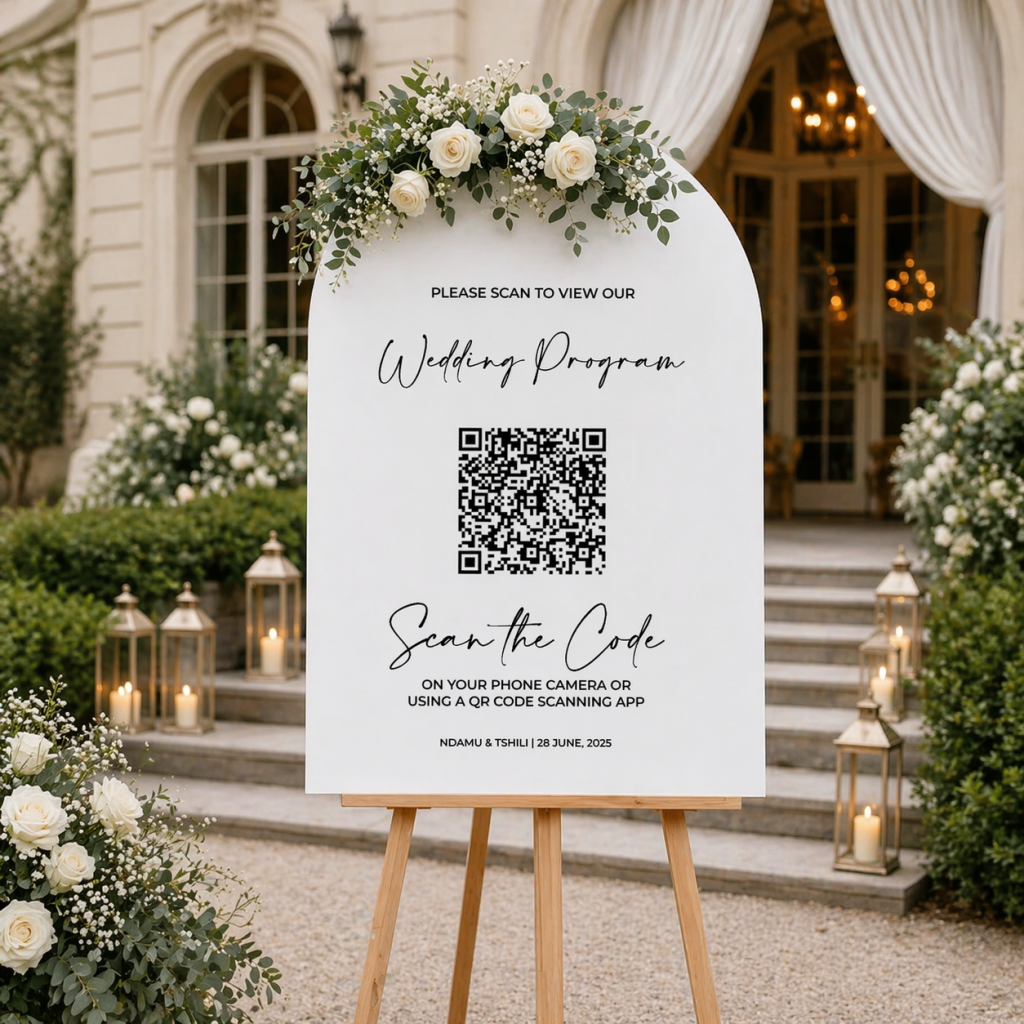
- Test every phone number, email address, URL and QR code.
- Confirm the RSVP deadline leaves time for venue, seating and production decisions.
- Check that wording about children, plus-ones, dress or gifts cannot be interpreted two ways.
- Ask one person who was not involved in writing it to read the complete suite.
How wording affects design
More words do not simply require smaller text. They change hierarchy, card size, line length, white space and sometimes the number of pieces. Share final or near-final wording before the layout is refined. Late additions can force a beautiful design to become cramped.
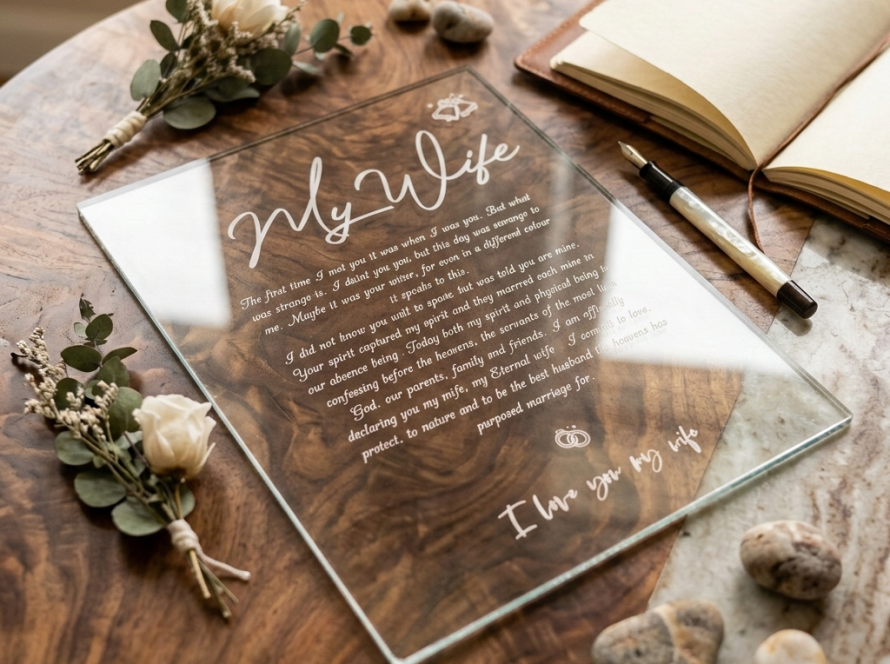
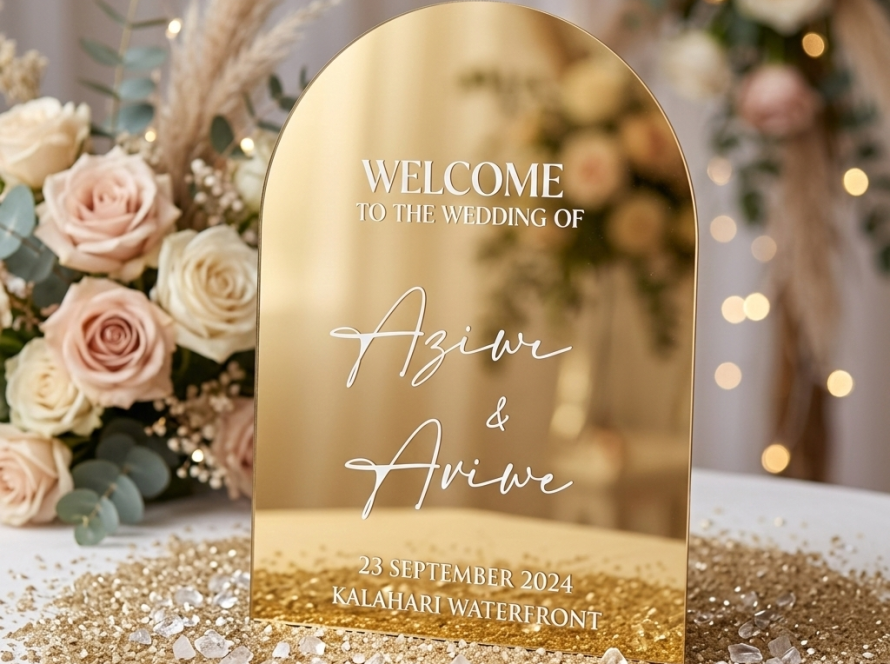
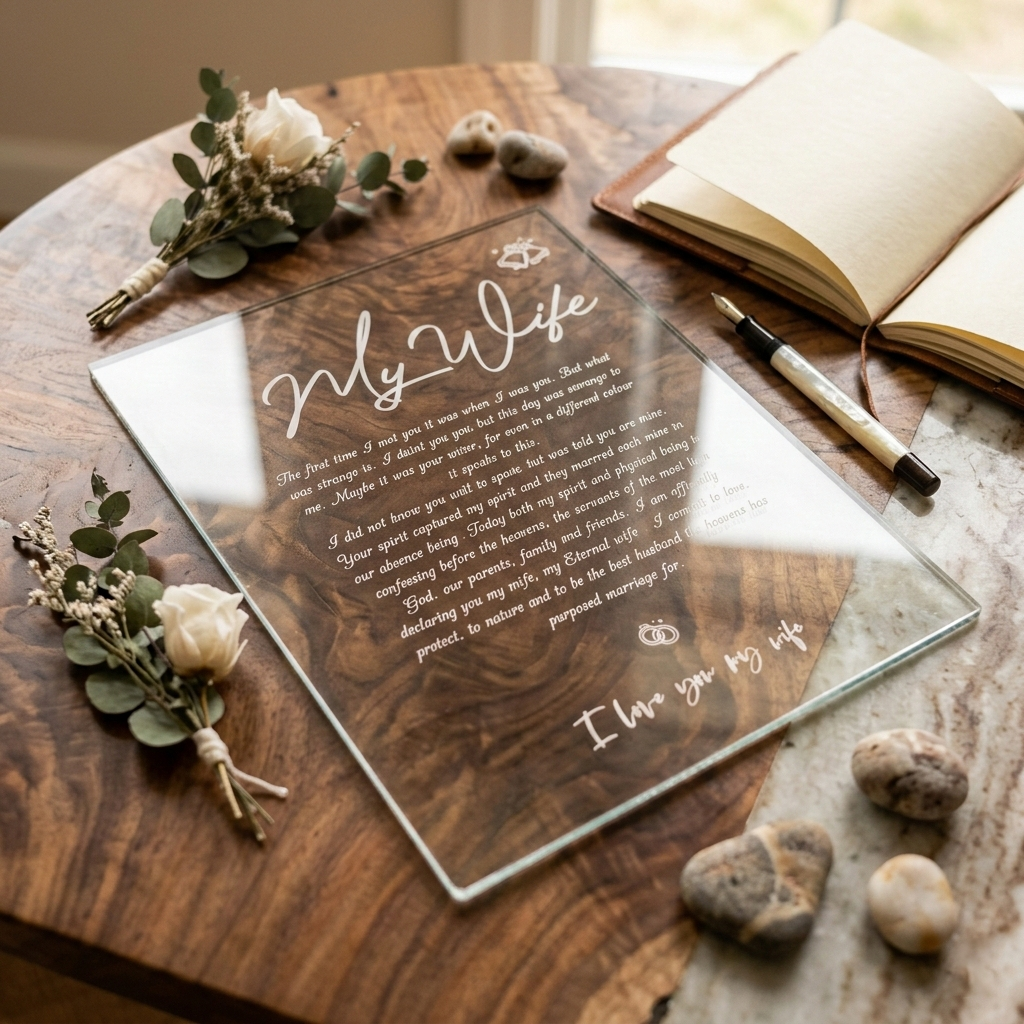
Materials matter too. A short statement can look striking on acrylic; a detailed schedule is usually easier to read on paper or a digital page. The right format follows the amount of information and the moment in which a guest will use it.
Frequently asked questions
Must both sets of parents appear on the invitation?
No single format fits every family. The host line can name one family, both families, the couple or use “together with their families.” Choose wording that reflects the real arrangement and feels respectful.
Can we use a digital invitation?
Yes. Digital invitations can be practical, especially for updates and responses. Printed invitations create a tactile keepsake and a more ceremonial arrival. Many couples use print for the invitation and digital tools for supporting information.
Can the invitation be bilingual?
Yes. Decide whether both languages will appear on one piece or on separate sides or cards. Provide approved translations and plan enough space so neither language feels secondary by accident.
When should invitations be sent?
A common planning guideline is about six to eight weeks before a local wedding, with more notice where guests must travel. Custom stationery must be designed, reviewed, approved and produced before that sending date, so begin the process earlier.
Make every word earn its place
Your invitation does not need to say everything. It needs to say the right things in the right order, then guide guests to the details they need next. Clear wording protects the elegance of the design and the calm of your planning.
Planning references: formal wording principles informed by Emily Post’s invitation guidance; suite components and timing cross-checked against The Knot’s invitation checklist. Adapt all examples to your family, culture, venue and confirmed production schedule.