The Uniplex Guide · Branding & Business
Small Business Branding Budget: What to Print First and What Can Wait
Quick answer: Build your small business branding budget around one sales objective and the places customers already encounter you. Prioritise accurate brand files, one useful item for the main customer interaction, and a clear way to respond. Add more formats when you have a plan to use them.
The fastest way to waste a branding budget is to buy a little of everything. You finish with a branded cupboard, but no clear route from seeing your business to buying from it.
Begin with the buying moment. A tradesperson meeting homeowners needs different tools from a café opening on a busy street. A consultant attending meetings has a different problem from an exhibitor trying to stop passing visitors. Your first purchases should make that particular interaction easier.
Choose your first three priorities
Get recognised. Make the business name, logo and main service clear. Get understood. Give customers one useful reason to choose you. Make action simple. Show a working phone number, enquiry route or relevant product page. The same three jobs can be done with different physical products.
| Your main sales setting | Possible first purchase | What it should do |
|---|---|---|
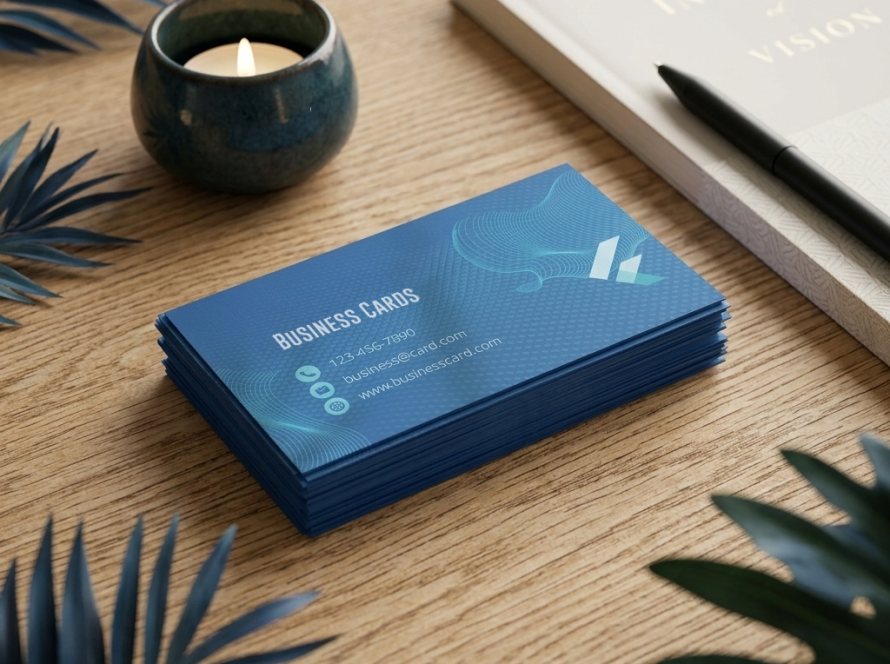
| Client meetings | Business cards | Make following up easy |
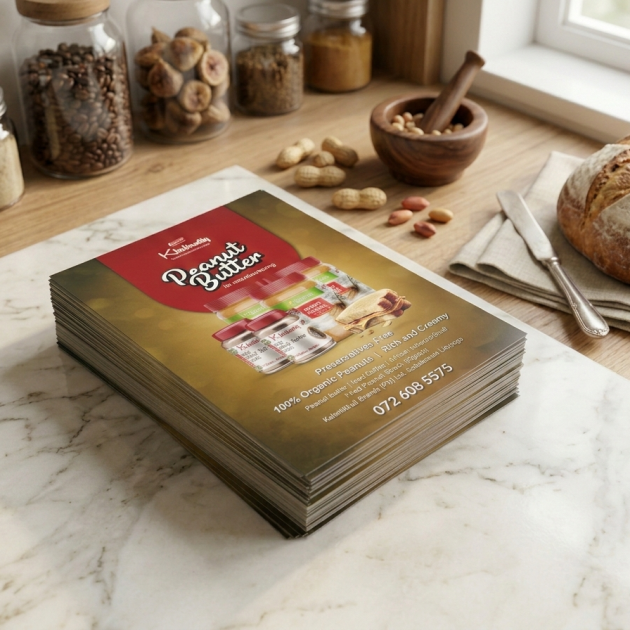
| Local promotion | Flyers | Present one relevant offer |
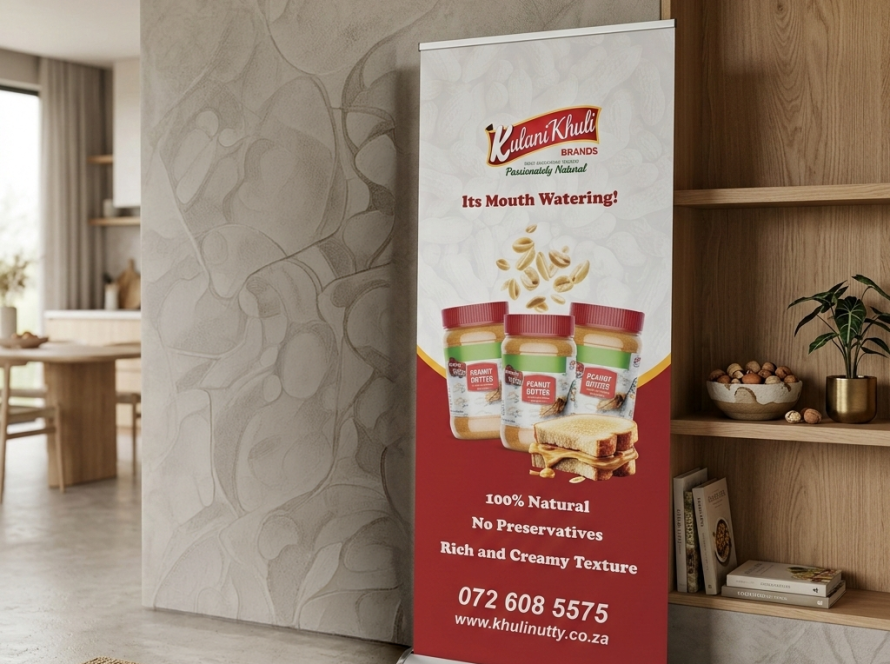
| Exhibitions | Pull up banner | Explain the offer from a distance |
| Customer-facing team | Branded clothing | Help customers identify staff |
Budget for the complete job
A catalogue starting price is a starting point. Before approving an order, check the selected variant, pack quantity, branding setup, artwork work and any additional charges shown. Establish whether tax is included in the comparison. Use the final written specification and total, not a screenshot of the cheapest option.
On Uniplex product pages, artwork options can change the displayed amount. Review them carefully. If your design needs work, say so in the brief so the quote reflects it from the start.
- Design and preparation: Is the logo ready, and who creates the layout?
- Production: What exact quantity, material, size and finish are included?
- Branding: How many positions or colours are being produced?
- Practical use: Do you need a stand, table, installation or other separately agreed item?
- Reordering: What will remain reusable and what will need to be produced again?
A practical starter brief, without an invented package price
Imagine a new property maintenance business. It wants homeowners who receive a recommendation to recognise the team and make an enquiry. Its first brief could be business cards for two staff members, a modest flyer run for a defined neighbourhood and coordinated shirts for site visits.
That is an illustrative selection, not a Uniplex package or quotation. It becomes useful when the owner provides the staff sizes, actual distribution count and artwork. If most enquiries come from face-to-face referrals, the owner might postpone the flyer run and improve the handover card first.
Use the Business Cards and Flyers pages to review current options. For a team garment, compare the Mens Letaba Golf Shirt and Ladies Letaba Golf Shirt, then confirm suitability and branding for the chosen sizes.
How many should you order?
Estimate realistic usage over the next campaign period. For cards, count the people who distribute them and the meaningful conversations they expect. For flyers, name each distribution location and its quantity. For staff clothing, build a size list before allocating garments.
Keep a sensible allowance for replacements, but be cautious when your contact details, offers or brand identity may change. A smaller run used completely can be a better decision than a larger run that becomes outdated.
Digital printing can suit shorter runs and jobs with variable information. The most economical route for your job still depends on its specification; there is no universal quantity at which every job becomes cheaper by another method.
Use one simple cost calculation
A campaign costs R3,000 in total. If it generates 10 new customers, the campaign cost per new customer is R300. If the contribution from each customer’s first order is R450 after direct fulfilment costs, those orders contribute R4,500 before the campaign spend, leaving R1,500 before general overheads.
This arithmetic does not predict your results. It gives you a way to judge them. Track actual customers and contribution, not just how many items you distributed. A higher-value client may justify more personal material, while a low-margin promotion needs especially careful cost control.
What can usually wait?
Postpone extra formats that have no owner, no distribution date or no clear audience. Delay very large quantities while an offer is untested. Avoid premium finishes chosen only because they look impressive on a screen. First ask whether they improve how the item is read, handled or kept.
Protect the essentials: legibility, correct information, suitable materials and a checked proof. These are difficult places to recover from a false saving.
Budget questions answered
How much should a small business spend on branding?
There is no useful universal rand amount. Set an affordable ceiling, identify the most important customer interaction and obtain an itemised quote for that scope. Expand after you know what gets used.
Does ordering more always save money?
It can lower the price per unit, but it increases the total commitment. Include storage, obsolescence and unused stock when assessing the saving.
Is design included in printing?
Check the selected product option and quotation. Uploading a logo does not automatically include a complete campaign layout or unlimited changes.
Should I spend on print or digital marketing first?
Follow your customers. Print can support a meeting, event or local interaction; a useful online destination helps people act afterwards. Fund a coherent customer journey before adding channels.