

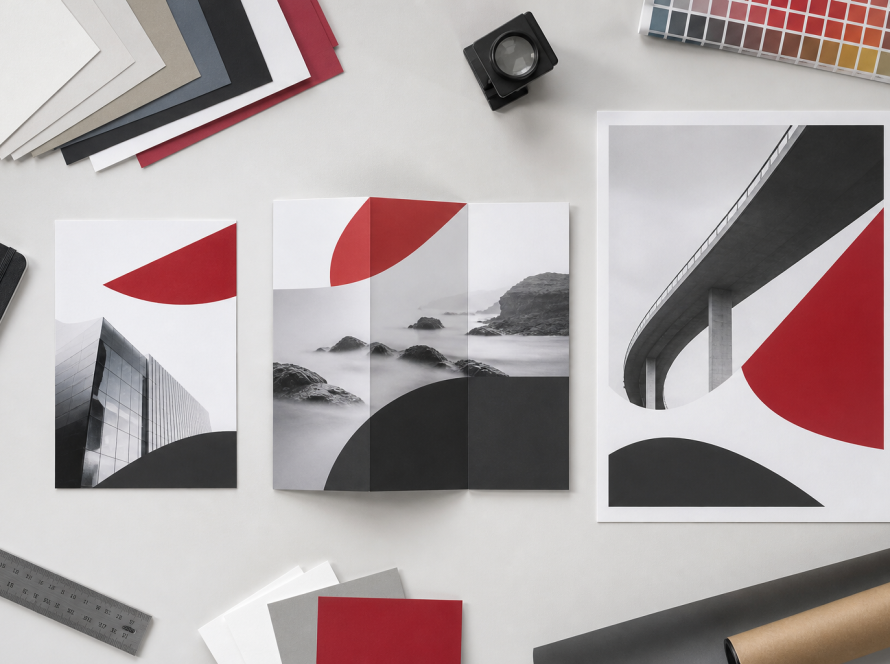
Quick answer: Use flyers for fast reach, brochures for higher-consideration sales and posters for repeated visibility. None is automatically “best.” The right print product is the one that matches the decision you want a customer to make.
Businesses often ask, “What should we print?” That is the wrong first question. Start with: “What must the customer understand and do next?” Once the job is clear, the format usually chooses itself.
A flyer is a single printed sheet designed to communicate one focused message quickly. Flyers work well for promotions, openings, menus, event announcements, product launches and local distribution.
A brochure is a folded or multi-page print piece that explains an offer in more detail. It is useful when prospects need to compare services, understand a process, review specifications or build confidence before buying.
A poster is a larger, fixed display designed to be seen repeatedly or from a distance. Posters work best when a short message must influence foot traffic, promote an event, support a campaign or reinforce an offer in a physical location.
| Format | Best for | Message depth | Main advantage |
|---|---|---|---|
| Flyer | Offers, launches, local campaigns | Short | Fast, flexible distribution |
| Brochure | Services, proposals, considered purchases | Detailed | Builds understanding and trust |
| Poster | Events, retail, awareness, directions | Very short | Repeated visibility at scale |
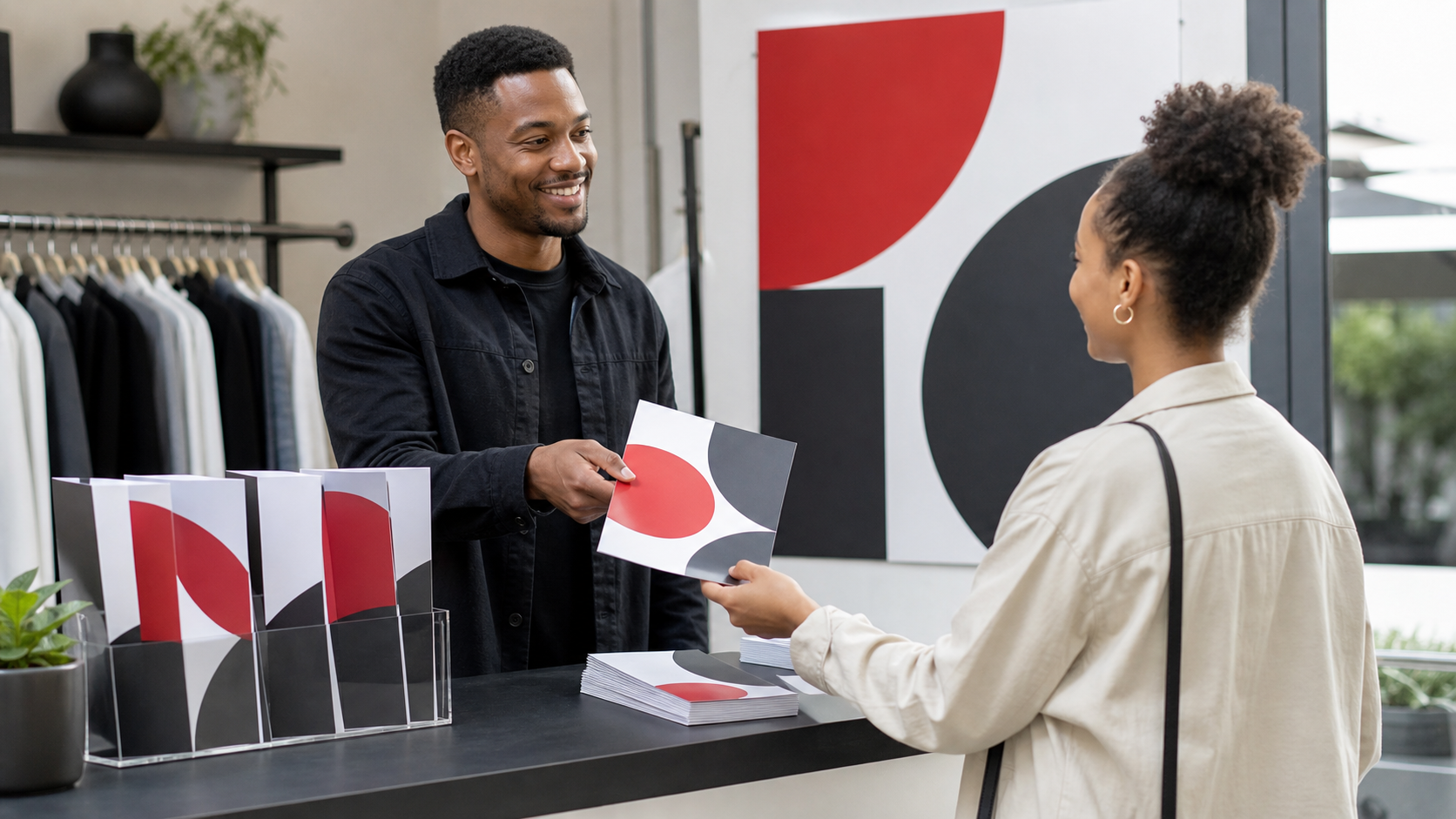
For awareness: use a poster when people do not yet know the offer exists. Your headline must work from a distance and create enough interest for the next step.
For immediate action: use a flyer when the offer is simple, timely and easy to claim. Put the strongest benefit, deadline and contact action where they cannot be missed.
For evaluation: use a brochure when prospects need proof, options or explanation before they can say yes. Use the extra space to answer objections, show outcomes and make the buying process feel safer.
Writing for “everyone” makes the message weak for everyone. Choose one customer, one problem and one desired outcome. Specific marketing feels relevant. Relevant marketing gets read.
Do not force five promotions into one layout. Lead with the offer that creates the most value and supports the next step. More choices often create less action.
“Learn more” is vague. “Request a quote,” “Book your fitting,” “Visit us before Friday” or “Scan to view the full range” tells the customer exactly what happens next.
Use a real deadline, limited appointment availability, event date, launch window or stock condition. Urgency should clarify timing, not manufacture pressure.
Flyers are usually simpler because they use one sheet and fewer finishing steps. Final cost depends on size, stock, colour, quantity, folding and turnaround. Compare the cost per useful response, not only the unit price.
Use double-sided printing when the second side adds useful proof, directions, product details or a strong call to action. Do not add content simply because space is available.
Choose size according to viewing distance, placement and available space. The farther away the viewer, the larger and simpler the message must become. Confirm the installation location before finalising artwork.
The most expensive print is the one that produces no action. Explore our marketing materials, browse signs, banners and posters, or ask Uniplex Media to recommend the right format. Tell us your audience, offer, distribution plan and deadline. We will help you choose a practical print solution built around the result you want.