

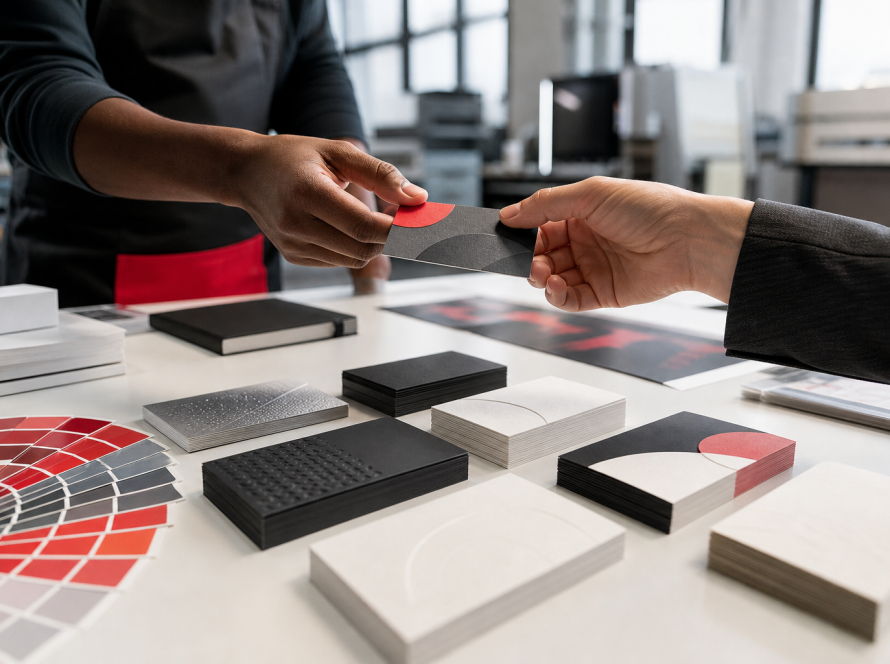
Quick answer: Great business card printing is not about fitting every detail onto a small rectangle. It is about making the next step obvious. A strong card tells the right person who you help, why they should trust you and exactly how to contact you.
Most business cards fail for one simple reason: they are designed to look “professional” instead of being built to create business. The difference matters. A pretty card may earn a compliment. A strategic card earns a call.
When you meet a prospect at a networking event, site visit, trade show or sales meeting, your card becomes a physical reminder of the conversation. It keeps selling after you leave. Done well, it makes your business easier to remember, easier to trust and easier to contact.
The goal is not to print the cheapest card. The goal is to create a card that helps one more qualified prospect choose you. One new client can repay the entire print run many times over.
Your logo identifies the business, but it does not explain the value. Add a short, specific promise such as “Fast commercial printing for growing brands” or “Branded workwear delivered nationwide.” Give people a reason to keep reading.
If a prospect has to squint, the card has already created friction. Use clear type, strong contrast and enough white space. Readability beats decoration because a message that cannot be read cannot convert.
A business card is not a catalogue. Too many services dilute your strongest offer. Lead with the service you most want to sell, then use your website or a QR code to show the full range.
Do not make prospects decide what to do. Tell them. “Request a quote,” “View our range” or “Book a free print consultation” is stronger than a row of unexplained contact details.
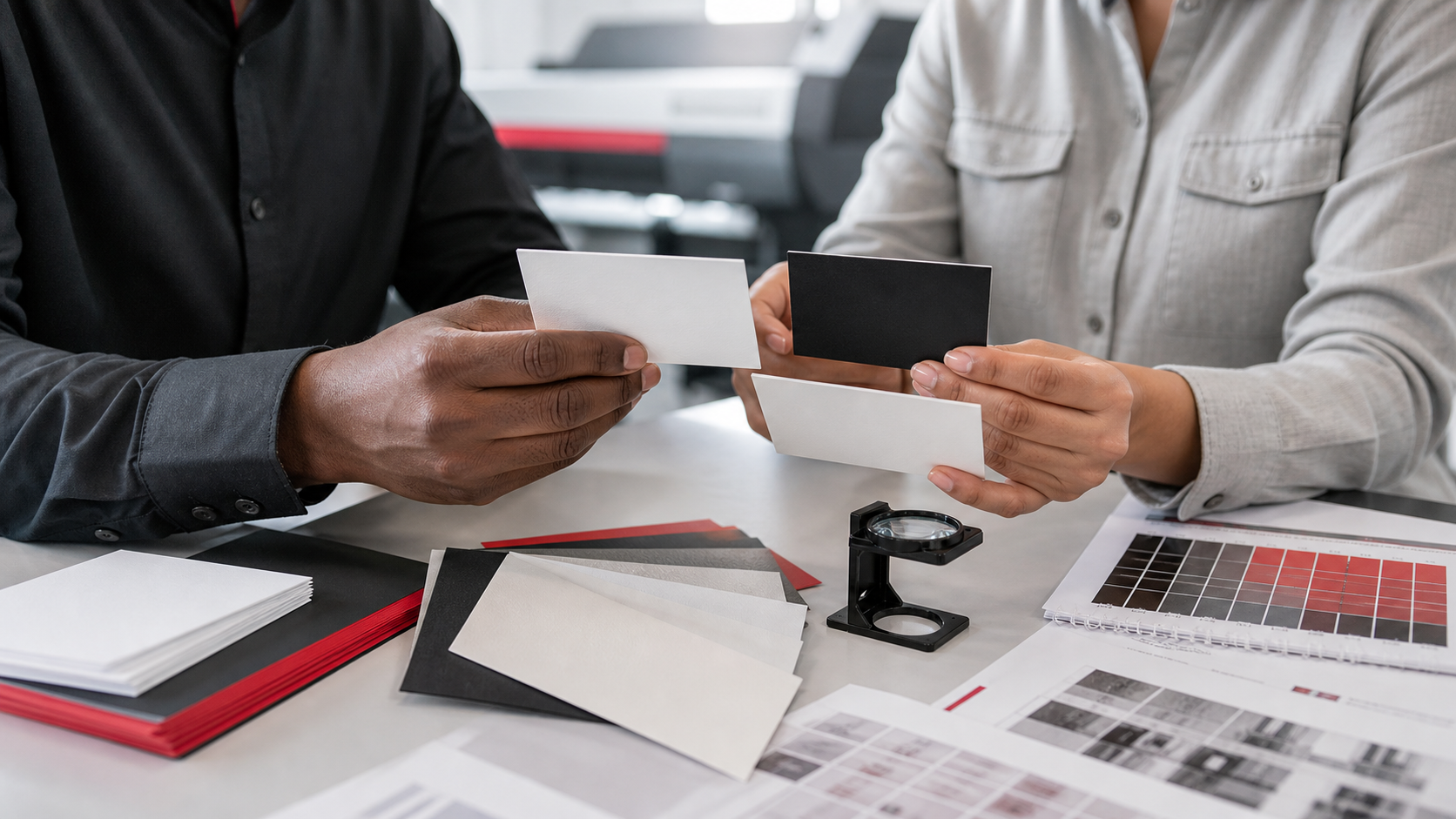
People feel your card before they study it. Thin, flimsy stock can make a capable company feel temporary. Premium paper, a confident finish and accurate colour reproduction create a stronger first impression before a single word is read.
A wrong phone number, outdated email address or spelling error turns a marketing asset into waste. Check every detail, scan every QR code and confirm bleed and safe areas before approving production.
A thousand cards in a drawer produce zero return. Decide who will receive them, where conversations happen and what offer the card supports. Print becomes profitable when distribution is planned before production.
Before printing, ask one question: “Would the right customer know what to do next within five seconds?” If the answer is no, simplify.
Price depends on quantity, paper stock, size, colour, finishing and turnaround time. The better buying question is: “Which specification gives my business the right impression without paying for features my customer will not value?” A good print partner helps you answer that before you spend.
Include your name, role, company, phone number, email address, website and one clear call to action. Add social handles only when they actively support your sales process.
Yes, when it sends people to a useful next step such as a quote form, portfolio or relevant product category. Always test it on multiple phones and avoid linking to a generic page with no clear action.
Usually. A second side gives the design room to breathe and lets you separate brand information from the call to action. The result is clearer, more useful and more likely to be kept.
You do not need more information on your card. You need a clearer reason to act. Explore our marketing materials, browse the full printing range, or contact Uniplex Media for a print recommendation and quote. We will help you choose a practical specification that makes your business look credible and keeps the next step simple.